Showing posts with label Sport. Show all posts

Wednesday, 23 November 2022

XCountry 118 touring pulk, Fjellpulken, 2021.

When I began researching the ‘polar’ case for MoDiP’s Endurance exhibition, I came across an expedition report written by a team from Imperial College London in 2005. It recorded the experiences of a group of four students who had crossed the Greenland ice cap, unsupported, the previous year, collecting a variety of hydrological, meteorological and physiological data along the way. It made for a fascinating read and was a great opportunity to find out exactly what this momentous 560km crossing actually entails; from the initial planning stages right through to lessons learnt once everyone had returned home safely.

The report provided an appendix with comprehensive equipment lists, and it was from these that I made the decision to concentrate on just one object for my case: the pulk (refer image below).


MoDiP’s pulk, AIBDC : 009127.
Image credit:
https://www.modip.ac.uk/artefact/aibdc-009127


The presence of plastics materials within all the kit required to sustain life on such a journey is so vast, I could not see how I could possibly represent everything fairly within just one small display case. For example, the Imperial College trip involved pulks, hauling harnesses, pulk bags, ropes, skis, ski poles, ski boots, gaiters, tents, sleeping mats, bags and liners, water carriers and bottles, personal locator beacons, compasses, maps, a satellite phone, whistles, first aid kits, rubbish bags, wash kits, goggles, balaclavas, insulated jackets, thermal base layers, waterproof jackets and trousers, socks, a variety of gloves, boots and, of course, packaged food (and I have not even listed here everything that they took!). Clearly the pulk becomes a lifeline; the source of safety, navigation, health, hygiene, climbing, skiing, drinking, eating, cooking, camping and clothing.


The contents of a pulk for polar exploration.
Image credit:
https://shackleton.com/blogs/articles/a-
pioneer-s-pulk-what-did-lou-rudd-haul-across-antarctica


A pulk is another name for a small sled, typically towed behind a skier and particularly popular in the Nordic countries. Boat-shaped to glide on top of the snow, they have been recorded in use for centuries, and were traditionally made of natural materials such as wood with animal skin covers. Modern versions are now made in plastics, such as MoDiP’s example from Fjellpulken, which has a glass-fibre reinforced polyester hull which was hand-casted in a mould. Once dry, the RipStop polyester covers were then fitted, and the runners and shaft attachments mounted into place.


The runners on the bottom of the pulk.
Image credit: Katherine Pell

 
We have also put a harness and hauling ropes on display to indicate how the pulk would be used in practice. Although rigid pole systems are becoming increasingly popular as an alternative to ropes, we would not have been able to fit an example into our cases! We believe the ropes are made of polypropylene with aluminium carabiner hooks for easy connection, welded rings and a shock absorbing rubber line. They were sold as part of a tyre pulling kit, which is common training for polar expeditions where pulks are being employed.


A rope hauling system (left) and a rigid pole system (right).
Image credit:
https://www.fjellpulkenshop.com/


There are advantages and disadvantages to both hauling systems. Whilst ropes enhance mobility, absorb shock, are useful in lifting or lowering the pulk over ridges, and practical in retrieving the pulk if it tips or gets stuck, they can present difficulties on a steep downward slope when the weight of the pulk becomes dangerous (essentially, it can run into your heels or even overtake you on the descent!). A rigid cross-pole system can provide stability and control but needs to be detached when access to the pulk is required or in a crevasse rescue situation.
 
Pulks are available in a variety of forms, sizes and weights, each suited to a particular application. MoDiP’s touring pulk is one of the smallest lengths available (selected on the basis of its ability to fit into the display case) and is designed to carry the equivalent load of two rucksacks. The width is calculated to ensure ease of movement and directional stability through snow.

It is a thing of beauty and I want one, despite the fact that I live in Bournemouth which rarely gets any snow (apparently the area has an average of only 4 snowfall days each year, with only 12mm snow actually accumulating on the ground!).


Heron looking confused (and cold) on my neighbour’s roof. March 2018.
Image credit: Katherine Pell


Endurance will be on display in the museum until 10th March 2023.
 
Katherine Pell
Collections Officer


Wednesday, 29 June 2022

Re: cycling

The 2022 Tour of Britain bike race takes place from 4th - 11th September, with Stage Seven seeing the riders pass through MoDiP’s local area. In anticipation and in celebration of this exciting event, we have put together a pop-up exhibition exploring the increasing role of plastics within the cycling industry.

Here are some of my favourite objects:


Image ref: The San Marco REGALe saddle on display.
Image credit: Katherine Pell


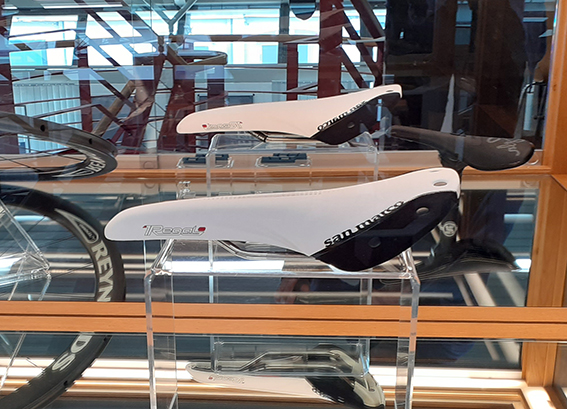
The REGALe racing bike saddle, manufactured by Selle San Marco in 2012, was first introduced in 1984, then called The Regal. It proved very successful amongst the professional racing community, in part due to its weight but mainly because of its comfort. This successor, the REGALe (e = evolution), retains the classic shape of the original but provided an opportunity for the company to introduce more modern materials. Released in 2010, it features a carbon fibre base making the saddle even lighter than before. We always enjoy putting this object on display because viewed in profile, it reminds us of Concorde!


Image ref: A 1950s mudguard extension.
Image credit: Katherine Pell/MoDiP


This lovely object is a clip-on mudguard extension with a rear reflector, made of cream coloured, thermoformed, cellulose nitrate and dated to circa 1950s (although it may date earlier). It was featured as part of our 10 Most Wanted project through which we hoped to find out some more information, such as who designed it and which company manufactured it. All we know is that it was ‘British Made’ from moulding details on the front. 

Rear reflectors were made a legal requirement in 1927 and, in response to the increasing number of road accidents, in 1934 the government introduced new requirements for bicycles to improve their visibility at night by carrying a white 12 sq. inch panel as well. Contemporary images show rear bike mudguards often painted with a white tip so obviously people were aware that this was a good idea, even before the legislation came into force. Could this object be an enterprising manufacturer's safety accessory from around that time?


Image ref: The Rehook on display and my mucky hands!
Image credit: Katherine Pell


The Rehook bicycle chain tool is designed to help cyclists get the chain back on to their bikes quickly, easily and without the mess of oil and dirt on hands and clothes. It is something I definitely needed the other day on my morning commute to work, when my bike chain came off – refer image above, on the right!! Designed by Wayne Taylor, it is made from glass-reinforced nylon, and has an adjustable high-grip silicone strap to attach the tool to the bike frame for easy accessibility. Weighing only 20g, the handle incorporates a honeycomb structure to assist with weight reduction and using plastics materials helped to keep production costs affordable, whilst providing strength, durability and a good range of colours for the tool. Rehook was pitched on the BBC programme Dragon's Den in 2021 successfully resulting in a £50,000 investment in return for a 25% share of the company.


Image ref: The undershorts with a D3O insert on the right.
Image credit: MoDiP


Developed by British engineer Richard Palmer in 1999, D3O is an innovative material with intelligent molecules that protect against injury. The putty-like substance has free-flowing molecules which lock on impact, absorbing and dispersing energy before instantly returning to their flexible state. Here, D3O is used to provide impact protection at the hip in the Race Face cycling shorts. It has been moulded to shape and is held in place in strategically located pockets so that it can be removed prior to washing.

Also on display is a carbon fibre composite road bike wheel, a fold-your-own polypropylene sheet mudguard, a stretch silicone LED light, and knee/shin pads with Kevlar®: a variety of synthetic materials that assist cyclists in staying aerodynamic, comfortable and safe.

Re: cycling will be on display until 12th September 2022, on the first floor of the AUB Library.

Katherine Pell
Collections Officer


Wednesday, 20 November 2019

Le Mans


The cinema release of the film Le Mans 66 starring Matt Damon and Christian Bale this week transported me back to June this year when I experienced the historical race for the first time.  The 24hours of Le Mans is a motor race not just of speed but of endurance too.  The fastest car is not guaranteed the win if it is not reliable enough to keep going for the whole 24hours.   There is nothing worse than waking up in the morning to find that the car you were supporting broke down in the early hours.

I went on a ‘girls only’ trip, with an ex colleague from our time working at Birmingham Museum & Art Gallery, which was great fun.  Whilst we were there I did a bit of plastics spotting and some not-plastics spotting.

Plastics spotting

We arrived on the Wednesday to take in all the support races and qualifying sessions on track, as well as the drivers parade through the streets of Le Mans itself.  We stayed in a campsite right inside the track with the now sadly departed Thomas Cook.  Having travelled by ferry, train, and tram, we were very pleased to not have to carry a tent or bedding as these were all provided as part of the package – the tent was even put up for us.  The nylon tent did a great job keeping us dry as the rain came down over night but did nothing to mask the sound of the cars on track, which actually became quite soothing, or our neighbours snoring, which did not.

 Our pre-erected Thomas Cook orange tent.

Some, but not all, of the cars had bodywork made of carbon-fibre composite which helps to keep the weight as low as possible.  Being lightweight means the cars can run faster and use less fuel but because they are so light they tend to want to take off so they need to have rear wings to help keep them on the ground.  The rear wing works in the opposite way to that of an aeroplane which uses the higher air pressure directed below the wing to lift the plane.  On the car the higher pressure is directed above the wing to push the car down so that it remains in contact with the road surface.

A rear wing for one of the LMP1 cars waiting to be put back on the car.
The weave of the carbon fibre can be seen here clearly.

With the cars being lightweight, it is easy to lift them off the track when they crash or break down. For the safety of the volunteer marshals, all the drivers and the other cars, it is vitally important that cars can be removed from the track as quickly and as safely as possible.  The efficiency of the actions of the marshals and safety crew was demonstrated in front of where we were sitting during one of the qualifying races.

Lifting the car by two points on the roof.

Right next to the track, and open all year round, is a fascinating museum full of amazing historical cars and objects relating to key drivers.  One car that caught my eye was the little 1967 British Mini Marcos which has a fibreglass body.  In 2013, I came across a bright yellow Mini Marcos from the 1980s and wrote a blog post about it. 

A 1967 Mini Marcos, a similar car came 15th in the 24hour event in 1966.

The grandstand seats were made of a plastic material which is probably something like polypropylene although some spectator seats are made of high density polyethylene.  What was interesting is how the seats have degraded outside in the elements and how they are only replaced when they really need to be.

The new green seats stand out against the different degrees of faded yellow.
The degradation takes its time to run across the whole seat.
The seats looked like they were crumbling but still had a useful life in them.
Even with a hole in it this seat can still take the weight off your feet.

Not-plastics spotting

When at a race track full of fuel-guzzling cars it might seem strange to find small environmentally friendly activities, but the quiet way some of the food stalls were moving away from wasteful single-use plastics was commendable. We were charged an extra Euro for souvenir cups which could then be reused (saving you that extra Euro on your next beer).  There were different cups with a range of sizes including pint, half pint, espresso, and champagne.

The reusable cups were too good to throw away.

Where there could have been plastic used to serve food, some stalls used paper plates or trays.  I had a delicious waffle covered in Nutella which could have proved disastrous on this flat card tray, I am so glad I didn’t drop it.

You will have to take my word for how delicious my waffle was.

To counter the quiet environmentally-friendly activity, was the shocking number of unnecessary give-aways that were thrown to the crowds during the drivers’ parade.  The streets were scattered with wrist bands, flags, hats, toy figures, keyrings, and frisbees that the people in the crowds called out for but then discarded.

Drivers handing out give-aways
The crowds grabbing for goodies that they probably won’t keep.

I am not sure what the outfit this poor person had to wear was made of but it was a warm afternoon and they must have been rather hot, I hope it was breathable.

The Michelin Man offered high-fives and hugs for all.

Louise Dennis (Curator of MoDiP)

Wednesday, 6 February 2019

Bike Helmets


Just before Christmas I foolishly dropped my bicycle helmet causing a large split to the inner foam. Having compromised the integrity of the helmet, I knew it would no longer provide adequate protection and I was going to have to go shopping for a new one. I did some online research to get inspiration for my new purchase and here are a few innovations that caught my eye:  
1. British startup LID Helmets launched their first design, a foldable bike helmet called The Plico, in 2017. It reduces in size by a third to enable easier storage when not in use, automatically adjusts to the size of your head ensuring a correct fit each and every time and is sold with a rear clip-on light pre-attached. Made from a polycarbonate outer shell with an expandedpolystyrene inner core, the foam liner is recycled from the car manufacturing industry.

The Plico in both extended and folded position.
Picture Credit: https://lidhelmets.cc/

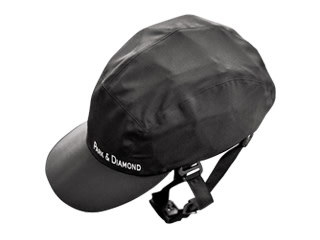
2. Park & Diamond have designed a collapsible bike helmet that looks like a baseball cap and folds down to the size of a water-bottle for easy storage. It also has a polycarbonate outer shell but an ethylene-vinyl acetate inner core, which the company claims will absorb and dissipate three times more elastic energy than a traditional bike helmet. The outer skin is interchangeable so that the colour of the helmet can be easily changed.

Picture Credit: https://www.park-and-diamond.com/
3. Swedish company Hövding have to date sold more than 130,000 of their revolutionary airbag helmet. Made of nylon, the helmet sits around the neck like a collar with a gas inflator stored within, powered by a battery. The collar contains sensors that are controlled by an algorithm that can distinguish between normal cycling and an accident. 

Picture credit: https://hovding.com/
MoDiP has a number of bike helmets in the collection as well as a range of other sports and safety helmets that can be viewed or borrowed for inspiration.

Katherine Pell, Museum Collections Officer.

Wednesday, 4 June 2014

Bournemouth Wheels Festival

During the Spring Bank Holiday at the end of May I took in the joys of the very first  Bournemouth Wheels Festival.  If you like cars, bicycles, motorbikes, anything with wheels this is the festival for you.  There were Supercars, vintage cars, Monster trucks, Bears on Bikes and a night ride for bicycles covered in lights and reflectors.

There was so much to see including a couple of plastics spotting gems.


I am sure that I have mentioned F1 cars in this blog before, as a life long fan it is difficult to avoid, especially as it is such a excellent illustration of the use of carbon fibre composites.

Carbon fibre composites were first introduced to the paddock in 1981, and offer a material which is 10 times stronger than steel and yet much lighter. This reduction is weight and yet still maintaining the strength allows the teams to build very safe, fast cars. The video below shows an interesting piece by Red Bull Racing about how to build an F1 car.


I have been to a race and testing at Silverstone, I have stood in the garage next to a running F1 car but nothing really prepares you for the sight of these amazing cars on the street in what is generally known as quite a sleepy, seaside town in glorious sunshine. Especially when they include Michael Schumacher's Benetton, the car in which he won his first Grand Prix race in Belgium 1992, here driven by Lorina McLaughlin.


How do you top F1 cars? With the classic Sinclair C5 of course.  It was a completely unexpected treat to see one of these environmentally conscious electric and pedal powered vehicles in the flesh.  


This little beauty, made of ICI supplied polypropylene injection moulded by LinPac, with a top speed of 30 mph was launched in January 1985. Unfortunately, with its low profile, fears of safety in traffic meant that the C5 was restricted to 15 mph making it feel very slow and eventually leading to its downfall as a desirable vehicle for British city streets.  However, it seems to be gathering popularity in Holland, the Dutch having wide, flat, cycle friendly and therefore C5 friendly roads.

If this year is anything to go by and you like cars you can't go wrong by getting yourselves down to Bournemouth next May for this spectacular event.

Louise Dennis (Assistant Curator)

Thursday, 6 September 2012

How students and staff use the collection #8 - International Students


During the summer months of 2012 MoDiP has been busy supporting the work of the summer schools and our International students by providing access to the collections in a number of ways.


In July we were asked to provide a collection of brightly coloured artefacts to support the Fashion Studies Summer School work in trend and colour development. Plastics are ideally suited to this – the use of colour is something they demonstrate supremely well and by selecting artefacts from different eras we were able to show the students from Brazil how everyday objects reflect popular trends in colour and styling.


Summer School visitors from Japan benefited from being able to see a range of garments from the MoDiP collection at close quarters. They included this 1920’s dress with gold metalwork; a stunning black and pink layered 1950s dress, a 1960s shift dress and a pair of men’s platform shoes from the 1970s.  The garments were selected as being typical examples of their era and, together with other artefacts from the museum’s fashion collection, outlined the changes in fashion in the UK over a 50 year period.


AUCB’s international students were given a brief introduction to the Museum and its collections when they visited the Plastics for Gold exhibition in August. Coinciding with the Olympic and Paralympic Games the exhibition provided an opportunity to discuss something of topical interest and to encourage students to talk about design.  Using the ‘Family questionnaire’, designed to get visitors to look at specific points of interest in the exhibition, as a starting point,  MoDiP staff spent an enjoyable hour getting to know the International students and helping  them to realise the value of the collection as a primary research resource.


In addition, a range of fashion and International costume from MoDiP will be used to support a forthcoming lecture this autumn to be given by Val Greathead, entitled Research and Practice; the use of the object in initiating and developing creative ideas. Items selected for the lecture have provided us with the opportunity to realise the potential of some of the museum's less frequently used artefacts.

A range of international costume has also been loaned to a local school to support textile students in their studies.


We are looking forward to welcoming new students to MoDiP and to helping them make the most of this outstanding resource.
 
Pam Langdown (Collections Manager)