Showing posts with label Using the collection. Show all posts

Wednesday, 9 March 2022

Student Creative Lisa Moro: Mid way!

This is my second blog for this project, and it is interesting to look back and see how my ideas have developed over the months. I was initially thinking of something which would play with objects in a novel way, then started to think about more specifically domestic labour-saving items and how I could play with the objects and their uses. 

I have collected lots of material and have tried thinking about different ways to represent the different objects and what they represent. 


AIBDC : 006304SA


I have also noticed that with digital scanning a different view becomes available, as we can see items from the inside


This idea has led me to start to think about being able to view the inner workings of some objects. Often when viewing an interesting or classic design of an object the use in practice can be overlooked, I have with this in mind been gathering scenes of people preparing for or using the items- doing the background work


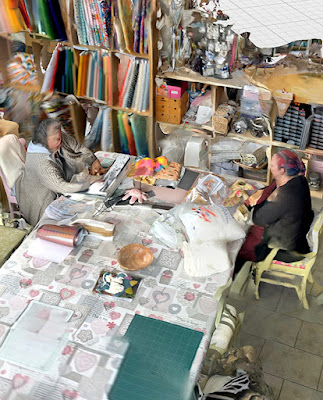
An example here is in relation to the sewing box where I have taken a 3D scan of a scene where two women are doing their craft. 


As I work towards my final iteration, I anticipate that I will create three such scenes where the inner workings of an object are revealed in life size proportions.


Lisa Moro


Wednesday, 2 March 2022

Student Creative Jasmine Baker: Welcome back!

We’re about halfway there with the project, and I’ve been busy conjuring lots of colourful things in the last few weeks, which I’m super excited to share with you!

To begin with, I visited the MoDiP Museum to view some of the wonders I’d found peering through the online gallery and spent a sunny afternoon creating sketches and illustrations to fuel inspiration for my picture book.

Whether or not my primary motivation to visit was driven by a desire to play with the objects in question, well, we won’t talk about that..

But here’s a photograph of some of the wonderful objects I had free rein over for a few hours!


Photograph from my first visit to MoDiP
Image credit: Jasmine Baker


In my first post, I set myself three questions to help spark some ideas, and you may be curious as to the answers I found myself with. Well, here they are!

  • What would a child’s perception of plastic be? Bright, colourful, fun

  • What would they think it’s purpose serves? The imagination

  • To a child, is plastic inherently positive or negative? Positive

At surface value, I decided that children would be likely to find plastic; positive, bright, colourful & fun, with its purpose being to serve their imagination. As some of their initial, first encounters with plastic would be toys.

I should know, I have an adorable 12-month-old niece and it’s an understatement to say that she spends half her life atop a mountain of toys, when she isn’t busy launching them across the room in her own rendition of ‘fetch’, of course.

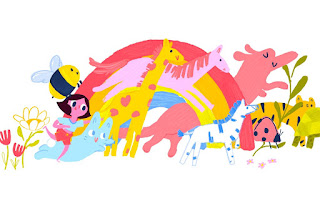
So, naturally, the themes I decided to tinker with are toys, colour, and the imagination, and to see where this would lead me. I started creating all sorts of doodles and let my own imagination roam wild. Here are some of my favourites!


Treasures (left) and Daydreamer (right) - front covers


Animals - page spread


Play - illustration


Toys - decorative page spread


Anyone feeling a tad nostalgic yet? Because I now wholeheartedly miss my Etch-A-Sketch and Tamagotchi. But like most retro toys, it is now upsettingly expensive to relive your childhood..

Anyway, next was to create some story boards, in order to organise the creative chaos - Here are a couple of outlines of what the narrative could look like, but things are still subject to change and take shape in new ways over the following weeks!


Treasures (left) and Daydreamer (right) - storyboard


Both of the narrative concepts I’ve conjured, ‘Treasures’ and ‘Daydreamer’, are about the adventures that children have, fuelled by their favourite toys. The concept for ‘Daydreamer’ makes me particularly excited because it plays with the border between pages, as the gutter of the page acts as a barrier between reality and the imagination. It’s also my idea to purposefully use colour to distinguish between the different worlds, with reality being black and white, and the dream world being filled to the brim with bright saturated colours.

That’s all I have for now. I will see you for the final update and conclusion to my MoDiP project next time!

Jasmine Baker

Wednesday, 3 November 2021

MoDiP AUB Student Bursary 2021/2022

Would you like to be the next MoDiP AUB Student Creative?
Fancy the opportunity to get up close and personal with a museum collection?
Want to see your work on display and inspire others?
Well, here’s your chance…

(We welcome applications from all disciplines.)


Some examples of the work from past creatives:


Adrian Finn, BA (Hons) Architecture, MoDiP Student Creative 2016/2017


For more information see below or contact modip@aub.ac.uk


Closing date: Sunday 21st November 2021


MoDiP Student Creative Brief

Introduction
The aim of the MoDiP Student Creative is to offer all students at the AUB an opportunity to create a piece of work inspired by the MoDiP collection. This could be in any discipline with any creative outcome from physical art work to film or acting production.

Background
MoDiP is the only accredited museum in the UK with a focus on plastics. It is the UK's leading resource for the study and interpretation of design in plastics. Our mission is to increase understanding and appreciation of the use and significance of plastics in design during the 20th and 21st century.


MoDiP’s purpose is to collect, research, interpret and present artefacts made of, or including components of, plastics, and thus add unique value to the Arts University Bournemouth as a learning resource, a resource for collaborative, experimental and interdisciplinary research, and as a gateway to the AUB’s wider environment.

Outcomes
The outcome of this project can be within any discipline working with any material but the work must be inspired by the MoDiP collection or its processes and working practice and in line with its mission and purpose www.modip.ac.uk/about. Depending on the medium, the work will be displayed in cases in the library and/or featured on all of our social media.


Terms and Conditions

Creative’s work

  • MoDiP and/or its plastics collection should be at the heart of the project

  • The applicant should expect to spend time looking at the collection and/or talking to the MoDiP team

  • The applicant could work in any discipline (they would not have to work in plastics)

  • The applicant should be prepared to have work displayed at the end of the project and to describe how they have been inspired by MoDiP

  • The applicant will need to give regular updates to the MoDiP team on progress (to ensure deadlines will be met and that the work can be physically displayed)


Timescale
The successful applicant will be appointed on Friday 26th November 2021, ready to start their project on Monday 29th November 2021. It is expected that the work will be completed and ready for display on Tuesday 19th April 2021.

Bursary
A £250 bursary (including material costs) will be paid to the successful candidate to facilitate the project. Up to 50% (£125) of the bursary can be claimed during the project as material costs are incurred. The remainder will be paid on completion.

Monitoring and evaluation
The resident will be expected to keep the MoDiP team updated with progress reports on a regular basis (to be agreed). This could be either through email including images, or face-to-face.

It is expected that the candidate will write 3 blog posts during the process – complete with images. The first will be a plan for the work, the second being a progress report, and the third showing the work and an overview of the project.

The experience
We expect you to work in a professional manner, engaging with both the collection and the staff of MoDiP. This is an opportunity to have your work published or displayed within a museum setting.

The project can be included in your portfolio of work to show future employers or clients. It will demonstrate working creatively to a deadline and experience of working with real clients.

Reference
Appointment will be subject to approval and written support from your tutor.

How to Apply
To apply please submit a proposal of 300-500 words with expected outcomes including how you intend to use the collection. Please include images of some of your previous work and the name of your tutor, who we will only contact if you are successful.

Email your application to modip@aub.ac.uk with ‘Student Creative’ in the subject box

Closing date: Sunday 21st November 2021

Interview and an opportunity to show Portfolio: Wednesday 24th November – Friday 26th November 2021 (we will contact you to arrange this).

When we will let you know: Friday 26th November 2021.


If you would like more information or an informal discussion about the project please contact the MoDiP team by email modip@aub.ac.uk


Wednesday, 20 October 2021

Object Analysis sessions

As term begins and the Arts University Bournemouth continues to welcome back students, we are beginning to return to some kind of normality. Over the past couple of weeks, we have been having zoom conversations with courses, introducing and reintroducing them to the museum and how they can use the collection, and welcoming small groups of students into our space to explore objects in greater depth. It is so nice to have this activity back on campus.

One session we have been doing over the past few days is that of ‘Object Analysis’ with two costume courses: BA Costume, and BA Performance Design and Film Costume.

In these sessions, students develop skills that enable them to gain information about the objects in front of us. We started the session with an introduction to MoDiP. We then looked at the objects on the table, without picking them up, to see what we could glean from them. Next, we had a quick session on how to handle museum objects, followed by time to explore the objects in more depth to see if that provides additional information. We used an object analysis form which can be found on our website with a series of questions. Those question include:


Function
  • What was the object’s likely purpose?
  • How was it used?
  • Consider size, weight, portability, ergonomics etc
Date
  • When might the object have been made or used?
  • Why do you say this?
Manufacture
  • What is it made of?
  • How was it made?
Audience
  • Who was it made for?
  • Who would have used it?
  • Are they the same?
Appeal
  • What was the appeal of the object?
  • Consider its desirability / aesthetic appeal / use.
Acclaim
  • Has the object won any awards?
  • Can it be attributed to a particular designer or manufacturer?
Significance
  • Does this object demonstrate any significant developments in design or technology?
  • Does it represent changes in social or political attitudes?

The selection of objects.  Image credit: L Dennis 

Each group were asked to select three objects out of the eight that were on the table. I specifically selected objects that might be new to the students but would have tell-tale clues that could lead to further information.


The Cameras

https://www.modip.ac.uk/artefact/aibdc-066571. Image credit: L Dennis

I chose the cameras because I thought that film cameras would not be something that all of the students had encountered. We spoke about what they looked like and what they reminded us of. Suggestions included disposable cameras and waterproof GoPros. They are quite unassuming, simple objects but with a bit more research we found that they were designed by Sebastian Conran for SupaSnaps.


The Shoes

https://www.modip.ac.uk/artefact/aibdc-008116. Image credit: L Dennis

The shoes proved to be an easy identification for most of the groups. They could obviously see that they were shoes without picking them up, they also figured out that they were for use in water and they might have something to do with sports. Despite reading out the label on the box - ‘Algae Green’ - no one clocked that the shoes were particularly interesting because they were made using algae as a feedstock for the plastic material.


The Pink Thing

https://www.modip.ac.uk/artefact/aibdc-007949. Image credit: L Dennis

The pink thing was selected by nearly all of the groups. Without picking it up, for the most part they couldn’t identify its function – the first question on the object analysis form. Without knowing its function, the groups struggled with any of the questions that followed. Once they were able to handle the object they discovered so much more about the ‘pink thing’ because it has a label on the side that contains so much information. It is a bin designed to collect waste chewing gum (rubber) which is then recycled, with the contents, to create more bins and other products.


The cream coloured block

https://www.modip.ac.uk/artefact/phsl-x12-0. Image credit: L Dennis

This block was chosen a couple of times by the students but because it didn’t look very interesting compared to the other things on the table it was overlooked by most. The groups that did choose it discovered there was more to it that meets the eye. They thought it might be old but hadn’t anticipated that it would date from the 1870s and made by Daniel Spill.


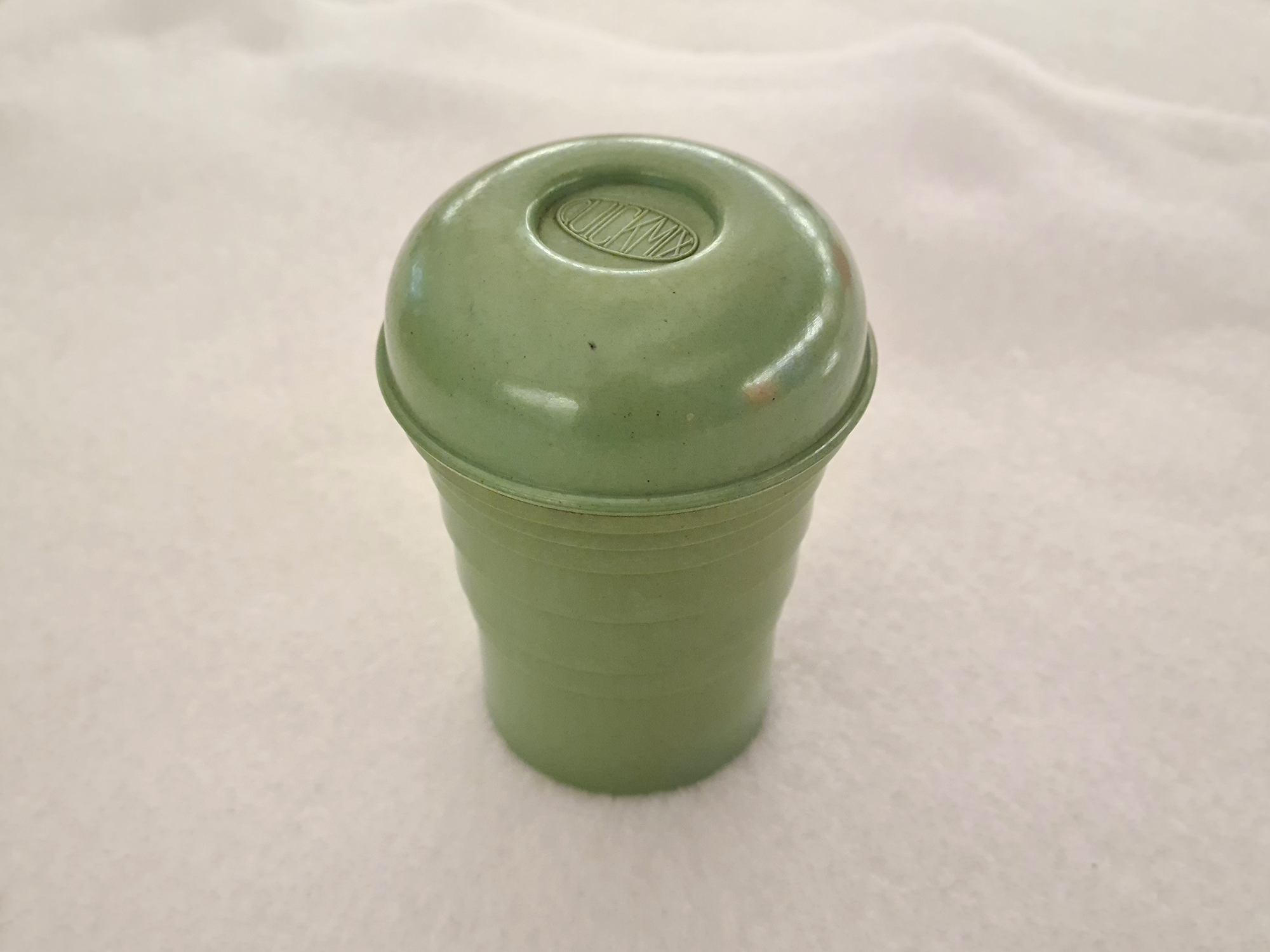
The Green Thing

https://www.modip.ac.uk/artefact/phsl-x41. Image credit: L Dennis

This object caused a little confusion with students seeing that it might be used for mixing something but they didn’t know what it could be. It reminded some of a dog treat toy, others were expecting that it might be squeezed to dispense the contents. It was not until they picked it up that they found it to be made of a very rigid material. They also discovered a patent number and additional information on the base which could have been used to find out more about the design developments that were on display here.


The Bag

https://www.modip.ac.uk/artefact/aibdc-008171. Image credit: L Dennis

The bag was laid down on the table and it wasn’t clear how you would carry it. Once the students started to handle it they found it to be a rucksack or backpack and they could see the continued use of seatbelt material on the back panel. By exploring the catalogue record the students also discovered that the bag itself is made from airbags. We thought about who the bag might appeal to with one group describing some very specific characteristics of the kind of individual who would use it.


The Hat

https://www.modip.ac.uk/artefact/aibdc-008192. Image credit: L Dennis

The helmet looks like a classic steel helmet from the 2nd World War. It is, however, made of phenol formaldehyde and has a lovely moulded inscription showing the manufacturer’s name not seen until it was lifted. The weight of the hat was also a surprise being much lighter than the students had anticipated.


The Cassette

https://www.modip.ac.uk/artefact/aibdc-007911. Image credit: L Dennis

Poor Elkie Brooks. No one chose to look at the cassette. I am not sure if this is because they knew what it was or because they didn’t. I included it because it is full of information that can help to start a thread of research that will tell us more about the object itself, as well as the time period it has come from.


These sessions help participants to foster research skills into objects. If you would like to bring a group to explore objects in MoDiP, whether you are part of the AUB or not, please do get in touch.

Louise Dennis, Curator of MoDiP

Wednesday, 29 September 2021

Plastic Vanitas, Mariele Neudecker, 2015

Six years ago, MoDiP hosted an international conference called Provocative Plastics, which took place over two days at the Arts University Bournemouth to explore the past, present and future potential of plastics. At the same time, we had an exhibition of photographs on display in TheGallery by Mariele Neudecker, to compliment the conference: Plastic Vanitas


Plastic Vanitas on display at TheGallery
Image credit: TheGallery

The basic premise of the project was to re-present the MoDiP collection as a series of Vanitas paintings. Vanitas was a specific form of Dutch still-life painting that became increasingly popular in the 17th century. Compositions included objects that carried symbolic meaning, such as a clock representing the passing of time, jewellery indicating wealth and food/wine alluding to pleasure. All of these would build up an overall moral message: the vanities of life are fleeting and, since death is inevitable, we should live our lives in the moment, as fully as possible.


One bay of shelving in the MoDiP store.
Image credit: MoDiP


Mariele had the opportunity to go behind the scenes at MoDiP and discover the collections for herself, removing boxes from the shelves at random and unwrapping the objects within them to see what they were. She became interested by how the objects were actually stored: by material, size and weight (heavy boxes on the bottom of the shelving and lighter ones at the top), in accumulations of objects that often make no intellectual sense.

To explore this further, she decided to ask the MoDiP team to identify potential objects that could represent the symbolism she was looking for. She would then take the entire box that each object was stored in and use all of the other items within (previously unseen by her) to form part of the still-life. The work was created in the Arts University Bournemouth's photographic studios with assistance from a team of students studying BA (Hons) Photography and BA (Hons) Commercial Photography.

In the artist's words:

I wouldn't call myself a photographer. I use photography but it's usually outdoors and photographing what's there, rather than setting up scenes like this. I'm learning loads about lighting etc. It's really fun how each student has their own tricks up their sleeve, which they're happy to share.

Mariele Neudecker


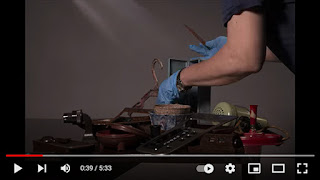
One student, Julio del Castello Vivero, recorded his experience as a time lapse animated film showing the process of the objects being unwrapped, positioned, lit and then photographed (refer below).


Julio del Castello Vivero’s animated film
Image credit:
https://www.youtube.com/watch?v=pZrlTRxRR5E


In total, Neudecker produced 49 photographic artworks that she has subsequently toured around the world. We have a selection on permanent display outside the museum, on the first floor of the AUB Library. Here are two of my favourites:


Still Life with Lemon and Apples - (the contents of Box 653).
Image credit: Mariele Neudecker


Still Life with Thermos jug and Door Handle - (the contents of Box 316).
Image credit: Mariele Neudecker


In remembrance of Leo Gauvain, seen in the image below on the left, smiling (he was always smiling) with Julio del Castello Vivero, myself and Pam Langdown.


Setting out objects in the AUB photography studio.
Image credit: Louise Dennis

Katherine Pell
Collections Officer

Wednesday, 9 September 2020

Your five a day

Inspired by our current #anappleaday social media campaign for September, I thought why not show how our collections can encourage us to reach the ultimate healthy-eating goal, and go the whole hog (not a great expression for a vegetarian) with a blog post featuring your 'five a day' fruit and veg.

Jif Lemon bottle

My first offering is this infamous - and easily recognisable - Jif lemon-juice container made from blow-moulded polythene. The design has remained relatively unchanged since the 1950s, so it is a definite winner in my book. Rich in vitamin C, lemon juice can add that much needed zing of acidity that enhances the taste of a whole range of dishes. So, although we wouldn’t eat a whole lemon in one go like we might eat an apple, its juice is one of the most versatile and commonly used ingredients in our daily diet.

The Cooks Carrot

My second object is this whisk, which has a carrot-shaped handle made of orange silicone and balloon wires covered in green silicone which look a bit like carrot tops. If this doesn’t inspire you to whisk up a healthy carrot soup, or maybe the ingredients for a ‘healthy’ carrot cake, then nothing will.

Bananice moulds

My third choice is this set of banana shaped ice lolly moulds. Each one has been made in the shape of a banana with the holders resembling peeled back banana skins. What better way to enjoy this potassium rich fruit, than mixed with yoghurt (and maybe a few strawberries) and frozen for a fun-filled fruity treat.

Strawberry Flip Syrup bottle

And talking of strawberries, my fourth choice is this strawberry-shaped, blow moulded bottle, used to contain syrup for flavouring (healthy skimmed milk) milk shakes – though you will have to add a handful of fresh strawberries, to count it as one of your 'five a day'!

Sweetcorn butter dish

My fifth and final object to inspire your ‘five a day’ is this polystyrene, butter dish in the shape of a corn-on-the-cob. And if you love the buttery taste of corn, where better than to keep your butter than in here? With vitamins B and C, as well as magnesium and potassium, corn is a much-loved summer vegetable which is enjoyed the world over.

You don’t have to be a vegetarian (or a vegan for that matter) to enjoy your happy, healthy ‘five a day’ diet, but it would definitely be a step in the right direction - and if our mouth-watering museum collections have helped steer you towards a fruitier way of thinking, then pile on the pick of the crops!


Julia Pulman, Museum Digital Communications Officer, MoDiP.

Wednesday, 17 June 2020

Still engaging with audiences

Attila Stool


Before the enforced COVID19 closures, I had been arranging for the ICON Modern Materials Network to visit MoDiP. The day would have included a talk from Fran Conrad, Course Leader for the MA Design and Innovation at the AUB, a visit to the AUB’s workshop to look at 3D printing, and a session looking at the newly installed Materials Library set up by the AUB library team.  We were really looking forward to welcoming the group to MoDiP, but it wasn’t to be.


E Series Chair


As you can imagine, I was over the moon to subsequently be invited to join a series of webinars held initially by ICON’s Book & Paper Group, but opened up to the other ICON specialist groups.  The series of talks comes under the heading of Conservation: Together at Home, and it was great to reach out to this audience and introduce them to MoDiP.  We have quite a small space so we would not have been able to accommodate the nearly 90 people who attended.


Beetleware cruet


If you would like to watch the talk, it is available on the Conservation: Together at Home webpage and sits alongside some other really interesting presentations. 


We are enjoying the opportunity to explore new ways of engaging with people but we do miss all of our students, colleagues, visiting researchers, external groups, and the general public.

Until we meet again.


Louise Dennis, Curator of MoDiP

Wednesday, 3 June 2020

‘Plastics for every body’ - a collaborative approach is always the best approach

Never has collaboration been so important with regards to how we are working at MoDiP.  During these extraordinary times, we have pulled together, reached out to our partner organisations and pushed and blended the boundaries of our roles for the better good of our students, schools, researchers and public.

For me personally, that meant making my newly written Cultural Hub project ‘Plastics for every body’ - about how plastics can help keep us safe, able and alive - available for teachers and their classes in a new and accessible way.

  
'Superduper' Super Hero character sporting running blades. 
By artist and illustrator, Jake Rowlinson.

I wanted to support the amazing work that our Cultural Hub teachers have been doing lately, by providing the project in a digital format, so it could easily be delivered to children either in school or to those being home-schooled. At this point I would like to thank teachers at Heathlands Primary Academy, West Howe, and Canford Heath Infants for their invaluable advice and support regarding the most effective formats and content to use to reach our local children (some living in particularly challenging circumstances).  You know who you are – so thanks a million and I’ve been clapping you on Thursday evenings.

Another collaboration that MoDiP continues to enjoy is the special working relationship we have with Martin Brown, Horrible Histories illustrator. Martin has yet again done us proud, and provided us with a brilliant drawing of the now familiar ‘Mo the MoDiP girl’ for this project.  Thank you, Martin!

Mo, the MoDiP girl wearing her protective scooter gear (made of different plastics) 
by Horrible Histories illustrator Martin Brown.

And a new and exciting young artist Jake Rowlinson, has also very generously created a stunning illustration of a super hero called ‘Superduper’ (see illustration header) with carbon fibre running blades for us to use for the project - making it just that little bit more exciting for everyone. Thanks Jake, and sorry we won’t get to see you play in your band at Wimborne Folk Festival this year…

Pre COVID-19, the project ‘Plastics for every body’ was to be centred around a museum handling collection and was to include artist-led workshops, with over 500 school children (Years 2 – 4) from five Cultural Hub schools enjoying a museum experience delivered in school, in conjunction with our current exhibition ‘Being me: plastics and the body’ 

Synthetic foot from the exhibition ‘Being me: plastics and the body’

After a dramatic rethink of how we might still be able to deliver this project virtually, and to increase the project’s reach, the content has been rewritten and reproduced with the aim of engaging all primary key stage levels across 15 Cultural Hub schools - so hundreds more children will now be able to enjoy and be inspired by a museum experience provided by MoDiP.

The resources for ‘Plastics for every body’ can be printed out and/or followed on screen (presentations have audio options and are also available via YouTube) both for home-schooling and for use in the classroom.  So, whether children have access to a laptop or just a smart phone – or no access to technology at all and are receiving printed resource packs from school - no child will be excluded. And, with Wellbeing a top priority for school children, a mixture of creative activities and physical mini breaks have been incorporated.

These resources are only available to Cultural Hub schools at this time – so maybe some non-member schools will read this, and be encouraged to join the Cultural Hub collaboration.

Having an excellent working relationship with the Cultural Hub and member schools has been invaluable for MoDiP and demonstrates just how important true collaboration is.  Having worked as an active member of the Cultural Hub last year to create and deliver our Eco-plastic Detective project, I was delighted to have this opportunity to develop yet another one – especially in these extra challenging times for teachers.  We are thankful to the Cultural Hub for reapportioning MoDiP’s funding for this project – and hope it benefits our local children and inspires many future AUB creatives. 

Julia Pulman, Digital Communications Officer, Museum of Design in Plastics.


Wednesday, 13 May 2020

International Museum Day

Monday 18th May 2020 is International Museum Day, an event that has been running since 1977 with the objective of raising awareness that museums are an important agency for cultural exchange. Last year 37,000 museums across the world participated in this celebration from 158 different countries and territories. This year’s theme is ‘Museums for equality: diversity and inclusion’.
In light of recent events here in the UK, MoDiP is not physically open at present but we are trying to maintain our online presence in these difficult times. We had hoped to mark International Museum Day with a series of activities in the museum to share with our multi-cultural community at AUB. As this is not now possible, we thought we would use this blog instead to feature some of the museum objects that have inspired our students, past and present, illustrating our belief that design in plastics has no boundaries and is for everyone.

Heida Jonsdottir (Iceland), BA (Hons) Fashion

Object chosen: Jelly plate, 
AIBDC : 006877

As I walked into the MoDiP museum, one particular thing caught my eye. A beautifully crafted, semi-transparent bowl with flowing features and a blueish hue. I returned a few times to the museum, but I was always drawn to this bowl. The pattern of the bowl and its blue colour reminds me of water, with one exception: water is chaotic, unpredictable and irregular while the pattern of the bowl is consistent and systematic. Maybe, the reason I am drawn to it is that I relate to it, a highly organised and systematic person studying something as chaotic as art. It made me wonder if I could achieve the same flowing shapes in my work, in garments as the shapes in the bowl, so I decided to try to make a pattern that would make the fabric behave similarly.
Garments representing the feel and movement of the Jelly plate, designed in Clo3D, a pattern cutting and virtual prototyping system


Dorine Bessière (France), MA Commercial Photography
Object chosen: Disposable cutlery, AIBDC : 007041

Plastic made of oil is a great invention by being cheap, flexible, friendly and very solid…but it is also a pollutant material, very difficult to recycle, and creates many environmental issues. For my project, I decided to focus on plastic consumption. Have you ever thought about how many toothbrushes you have bought and how many you will throw away in your life?

I selected to photograph a range of disposable objects from our everyday life that are manufactured, bought, used and thrown away in mass quantities. By accumulating them in pictures I wanted to awaken the viewer's eye and mind.

Using Photoshop software, I cut out each object in order to create different repetitive patterns.


Yudit Lee (Korea), BA (Hons) Modelmaking 

Object chosen: 
Valentine typewriter, AIBDC : 005603

As a final major project for my 3rd year, I choose to make a 2/3rd scale product model of the Olivetti Valentine Typewriter, designed by Ettore Sottsass. I was fascinated by the bright red colour of the typewriter: when I first saw it in MoDiP, I couldn’t take my eyes off it! The innovative design has the power to instantly brighten the mood of the room and grab everyone’s attention. 

Using CAD software, Fusion 360, I modelled the typewriter to produce technical drawings. I then used different machinery and techniques, such as the lathe, CNC router and 3D printing, to produce the product model, shown here with all the componentry laid out before final assembly

Image ref: Yudit Lee


Hirunkorn Nikornsaen (Thailand)MA Illustration

Object chosen: Packing tape basket, AIBDC : 005742

I saw the plastic shopping basket on display in the museum and it reminded me of the way we use it in Thailand, which is my home country. It’s a Thai pop traditional basket and is made from recycled plastic straps. We weave them together. We, the Thai people, only use this basket for grocery shopping at the fresh market in Thailand. I produced an illustration to show how we use it in Thailand, in the local lifestyle.

AUB Illustration students were asked to create a piece of work in response to an artefact in the museum. 


Jak Hansford (Britain)MA Fine Art


Object chosen: Eve fruit bowl, AIBDC : 006731

My choice of objects had mundane functions but innovative shape and form within their design. I found this a bit tricky as in the past I have focused on the mundane and then redesigned. The fact that these items have existing design quality meant it would be more exciting to push how I think or see them differently.
My final piece showcased the energetic and playful attributes that the artefacts I chose hold. While I started focusing on one MoDiP object at a time, the project developed, and I began seeing the potential of the objects together and intermingled especially through collage. The still life imagery I created could offer more than my singular drawings could. By this I mean the space around and interaction between each object and how this provides intrigue and interest.
The final piece, 180cm x 40cm, is one of the biggest tufted works I have ever produced. 
 
Image ref: http://museumofdesigninplastics.blogspot.com/2020/04/student-creative-jak-hansford.html

If you are interested in accessing MoDiP’s collections to inspire your own research, you can still use our images during this period of closure. Please credit them to 'Museum of Design in Plastics, Arts University Bournemouth' and we would love to hear from you to find out what you have done and which objects you have chosen. 
MoDiP's catalogue can be viewed online and our Residencies and Inspiring case studies illustrate a variety of ways in which others have used the collection as a resource for creative inspiration and object-based learning.
#StayHomeSaveLives

Katherine Pell, Collections Officer.