Wednesday, 17 July 2019

Plastics Heritage Congress 2019

At the end of May the Plastics Heritage Congress, a three-day international conference, was held at the Museu Nacionale dos Coches, Lisbon, Portugal.  The theme of the conference was History, Limits and Possibilities and attracted delegates from all over the world, including the USA, Australia, Africa, and all over Europe.

The keynote lecture by Jeffrey Meikle was particularly interesting to me as his book American Plastic: A Cultural History plays a vital role in my PhD research.  
All of the three days were split into two streams and it was difficult to choose between which talks to attend because they all sounded fascinating.
On the Wednesday, I chaired a session entitled Museums, Collections and Archives and introduced papers presented by Cancy Chu, University of Melbourne, on the Impact of plastics on archives; VitÄ›zslav Knotek, University of Chemistry and Technology in Prague, on the Identification and degradation of cinematographic films with magnetic audio track; and Masahiko Tsukada, Tokyo University of the Arts, on the Material analysis of animation cels produced in early 1990s before the digital era.  All of which looked at the analysis of the materials used and considered how they might be stored.
On the Thursday, the papers were focused on conservation and cleaning techniques and concluded with a coach trip to a museum in Leiria in central Portugal to view an exhibition about plastics.  I will write another blog post all about the exhibition and the objects included. 
On the last day, I presented a paper entitled Making Connections: the development of relationships between museum visitors and objects of historic polymeric materials which was received favourably.  In addition, alongside Katherine Curran, Suzan de Groot, Ruth Keller, Maria Joao Melo, and Geoffrey Mitchell, academics from across Europe, I judged the poster entries and awarded the prizes. 
One of the speakers on the Friday was Mariele Neudecker, talking about her MoDiP project Plastic Vanitas.

It was nice to see the image below on one of Mariele’s slides showing my colleagues, Pam Langdown and Katherine Pell, alongside two students who worked with Mariele on her project.  The student on the left side of the image, Leo Gauvain, sadly lost his life when he returned to Bangkok after completing his degree in photography at the AUB.  The team at MoDiP were very sorry to hear about this tragedy. 

Through-out the three days, I learnt a lot about all kinds of plastics materials, from Gutta Percha, a material derived from tree sap, to Carbolite, a Russian version of the more commonly known Bakelite, and met some great people working on some amazing projects.
Louise Dennis, Curator of MoDiP

Wednesday, 10 July 2019

Spice box

Newly acquired by MoDiP as part of the Plastics Historical Collection, is this lovely spice box or masala dabba. 


A masala dabba is used for the short-term storage of the most commonly used spices in Indian cuisine. These containers enable the cook to have their favourite spices to hand without having to open jars, and enables easy and quick blending of the chosen spices. This example is made from compression moulded urea formaldehyde and has a registered design number on the base suggesting that it dates from circa 1949. These spice pots are often made from metal or wood, but this example is from an era when new uses were sought for plastics materials. It is made in a familiar green colour, typical of its time, and hand decorated with a floral design.


If you would like to see this particular object, other objects from the Plastics Historical Society collection or indeed any object in the MoDiP collection not currently on display, please contact a member of the MoDiP team to arrange a visit.

Pam Langdown

Documentation officer


Wednesday, 3 July 2019

Eco-plastic Detective – part two

With the final two sessions having been delivered in the museum for St. Luke’s Church of England primary school, we reflect back on the Eco-plastic Detective Cultural Hub project and examine why it has had such an impact with our local schools.

Pupils being Eco-plastic Detectives - image credit St Luke's C of E Primary School

To bring you up to date, and since my last blog post, we have delivered 17 sessions to 476 local school children…phew! And I must say we’ve had a bit of an impact.

The art workshop days - led by the ever-popular artist Darrell Wakelam – were hosted in two local schools, allowing more children to get their sleeves rolled up and get stuck into a quality arts project.

Pasting the sea into the water bottle collage

Sides of the recycling bin with happy fish swimming in a clean sea

Inspired by objects from MoDiP’s handling collection - namely a whale, a Manta ray and a turtle (yes, really…see the images below) the children fashioned fish and sea creatures to feature in and decorate a massive, over-sized water bottle collage and a big single-use plastics recycling bin to be used in their schools.

https://www.modip.ac.uk/artefact/aibdc-0081951
https://www.modip.ac.uk/artefact/aibdc-0081952
https://www.modip.ac.uk/artefact/aibdc-0081953

The idea behind these being, if we recycle our single-use plastics our oceans will be happy and healthy, and if we don’t…they won’t.  A simple message, but a powerful one, and one that children can relate to and play their part in on a daily basis, in their everyday lives.

Looking at the feedback from the Eco-plastic Detective sessions, it is clear that the objectives of the project – to learn about different types of plastics and how they can be recycled, as well as objects made from upcycled, recycled and plant-based plastics – have been met. 

Pupils being Eco-plastic Detectives - image credit St Luke's C of E Primary School

Comments from the children at the end of their sessions, when asked what new thing they had learnt about plastics include:
I didn’t know that a plastic chair could be made of wool.
I didn’t know that my cardigan is made of plastic.
I just thought plastic was one thing – now I know there are different types of plastics.
I didn’t know that plastic toys could be recycled into something else.
I didn’t know bouncy castles could make other things – like a pencil case.
I found out that Lego can be made from sugar cane.

So, there we have it. The evidence. This project - Eco-plastic Detective, backed and funded by Dorset’s Cultural Hub - has passed its parole and can be released to freely inspire good behaviour, with regards to our plastics well into a happier, healthier future. 

Illustration by Martin Brown

Eco-plastic Detective project resources are available to download here: https://www.modip.ac.uk/engagement/schools/eco-plastic-detective

Julia Pulman
Museum Engagement Officer

Wednesday, 26 June 2019

Raw Materials: Essay

What do you think of plastics? Until recently many people did not give plastics a second thought. Yet now they are much in the press widely condemned as polluters of rivers and creators of the Great Pacific Garbage Patch. It has become fashionable to try to go plastics free but how realistic is this? We have had plastics for over 150 years and for around a third of these more things and a greater range of things have been made of plastics than of any other materials group[i]. Plastics have become fundamental to the world we live in. Arguably, they have only taken such a strong hold because they have changed the world for better as well as for worse.

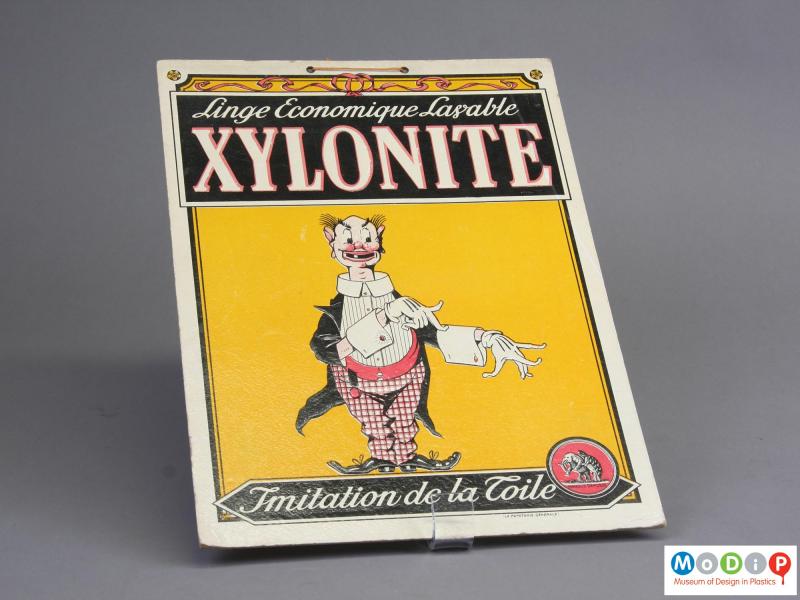
The story of manmade plastics began in East London with the invention of Parkesine, a form of cellulose nitrate. An announcement introducing the material in 1862 took particular pride in its ability to create ‘the most perfect imitation of Tortoise-shell, Woods, and an endless variety of effects.’[ii] This statement draws attention to one of plastics’ outstanding characteristics: their unusual versatility. Plastics have no intrinsic form or texture, thus they are not materials that can be true to themselves in the sense promulgated by such design leaders as William Morris[iii]. This may have contributed to their reputation as deceitful and thus undesirable materials but their compensating factor is that, given the appropriate research, they can be whatever you want them to be and perform in ways no other materials can. It is noteworthy, in the light of the current focus on the damage plastics are doing to wildlife, that in their early days this characteristic was often used to imitate precious natural materials with a view, precisely, to saving endangered species. Indeed, the development of a similar material, known as celluloid, in the USA is said to have been motivated by a reward of $10,000 for the discovery of a material that could take the place of ivory in the manufacture of billiard balls[iv] (1). Two further early East London factories, the Ivoride Works and British Xylonite had, respectively, an elephant[v] and an elephant and tortoise walking arm in arm[vi], as their trademarks (2). 


(1) Snooker ball, Parkesine, 1860s 
Plastics Historical Society PHSL : PAR 119


(2) Xylonite advertisement with Xylonite detachable collar both showing the Xylonite trademark, 1930s. MoDiP AIBDC : 006061 & AIBDC : 006062 


Plastics have gone on to be beneficial in many other ways. For example, they have been a significant democratising force: celluloid film transformed photography from a gentleman’s art requiring expensive paraphernalia into an egalitarian medium that gave rise to the family snap[vii]. Music has been made more accessible initially through shellac, a natural plastic, then vinyl records and more recently through polycarbonate CDs. Even now that digital recordings are becoming the norm, vinyl sales are growing year on year[viii] Renowned designer, Philippe Starck, sees plastics as the material for his leading edge designs: ‘I always want to make things more and more affordable. I want to reach the maximum I can, for everybody. Only mass-produced plastic objects can do this (3).[ix]


(3) Miss Sissi lamp designed by Philippe Starck and made by Flos from polycarbonate, about 1999 MoDiP AIBDC : 001351

Even some single use plastics have some advantages over traditional materials. The fourth largest use of plastics is for medical purposes[x]. Disposable syringes(4), intravenous blood bags and urine continence and ostomy products are now made of plastics. Some make the case for sterilising equipment but this uses huge amounts of water and energy. Plastics also enable life-saving procedures, which would just not otherwise be possible[xi]. There is a case also for plastics packaging. Food wraps are formulated in a myriad of different ways in response to the specific needs of different fruit and vegetables to keep them fresh for longer. A shrink-wrapped cucumber can last up to three times longer than an unwrapped one[xii].


(4) Non reusable syringe, designed by Marc Andrew Kosca in 2001 and made in polypropylene under licence by Hindustan Syringes & Medical Devices Ltd. about 2011 
MoDiP AIBDC : 008069.2

Furthermore there are ways in which plastics directly make for a more sustainable world. Only 4% of global oil production is used for plastics compared to 87% for transport, energy and heating, which is simply burnt and lost[xiii]. The lightness of plastics provides a real benefit in terms of fuel consumption. For example, for the same amount of bags, it takes one lorry to deliver plastic and seven to deliver paper bags[xiv]. Nowadays plastics make up about 50% of a vehicle’s volume but only about 10% of its weight[xv]. Imagine how much heavier and thus, how much more fuel these vehicles would use, if they were made only from traditional materials, and, of course, more fuel means higher exhaust emissions. 
Undeniably another side of plastics exists. Plastics present a paradox: they enable almost everything we do whilst, at the same time, being leading contributors to potential environmental catastrophe. However, the problem with plastics is not the material itself but rather human behaviour. Plastics are the only totally manmade materials group. Therefore, more than is the case with any other material, responsibility from their inception to their disposal lies with us.

Increasingly there are significant pockets of research into environmentally friendly plastics materials. They include exploring ways to make plastics made from fossil fuels, currently the majority, biodegradable and sourcing plastics from biomass, that is renewable feedstocks, for example crops. However both give rise to controversy. Biodegradable plastics are frequently only biodegradable in commercial composting units yet their biodegradable status makes people feel they can throw them away wherever they are; and there is an argument that land should be used to grow food not plastics. If either biodegradable or biomass plastics get into recycling systems they can undermine the recycled plastics produced and if they go to landfill they release methane, an environmentally damaging greenhouse gas, as they decay[xvi]. There is a movement also towards responsible design, for example using as few plastics materials in a product as possible; and ensuring the different plastics can be identified and easily separated to facilitate their disposal into different recycling streams. However these initiatives are largely reliant for their effectiveness on the responsible disposal of the resulting products and currently there is no joined up strategy for recycling even within the UK, let alone the world at large. This is the challenge. Governments need collaboratively to support research into ways of designing into plastics materials and products, at the concept stage, disposal mechanisms that create value rather than devastation for the environment. They also need to work together to make recycling effective. Would not the plastics-free movement be so much more effective if it were to re-direct its efforts to lobbying governments in this respect?

Professor Susan Lambert,
Museum of Design in Plastics, Arts University Bournemouth

[i] Cascini, G. and Rissone, P. 2004. ‘Plastics Design: Integrating TRIZ
Creativity and Semantic Knowledge Portals’, Journal of Engineering
Design 15(4): 405–24.

[ii] Parkesine, Plastics Historical Society, http://plastiquarian.com/?page_id=14375, accessed 31 March 2019.

[iii] Arts & Crafts, William Morris Gallery, https://www.wmgallery.org.uk/collection/themes/arts-and-crafts/, accessed 31 March 2019.

[iv] Jeffrey Meikle, American Plastic: a Cultural History, New Brunswick, New Jersey: Rutgers University Press, 1995: 10.

[v] Ivoride sample with trademark, https://www.modip.ac.uk/artefact/phsl-x12-0, Accessed 31 March 2019.

[vi] Poster and collar bearing the trademark, https://www.modip.ac.uk/artefact/aibdc-006061, accessed 31 March 2019.

[vii] Stephen Fenichell, Plastic: the Making of A Synthetic Century, New York: HarperCollins, 1996: 53-63.

[viii] Matthew Leimkuehler, Vinyl Sales Continued To Grow In 2018, Report Says,

imkuehler/2019/01/07/vinyl-sales-grow-2018-buzzangle-beatles-kendrick-lamar-queen-album-sales/#26b72c79775a, accessed 31March 2019.

[ix] 23.06.15 Material Tendencies: Philippe Starck.

https://www.architonic.com/en/story/anita-hackethal-material-tendencies-philippe-starck/7001128, accessed 31 March 2019.

[x] Michael Szycher, High Performance Biomaterials: A Complete Guide to Medical and Pharmaceutical Applications, 1991: 3. Published as ebook 2017:

https://www.taylorfrancis.com/books/e/9781351440967, accessed 31 March 2019.

[xi] Craftech Industries, The many uses of plastic materials in medicine, http://www.craftechind.com/the-many-uses-of-plastic-materials-in-medicine/, accessed 31 March 2019.

[xii] The Cucumber Problem: Is Shrink Wrapping that Bad?, 9 April 2018, Ecoveritas, http://www.ecoveritas.com/the-cucumber-problem-is-shrink-wrapping-that-bad/, accessed 31 March 2019.

[xiii] British Plastics Federation, Oil consumption, https://www.bpf.co.uk/press/Oil_Consumption.aspx, accessed 31 March 2019.

[xiv] British Plastics Federation, Plastic packaging and the environment, https://www.bpf.co.uk/packaging/environment.aspx, accessed 31 March 2019.

[xv] Maria Jerin, Importance of plastics in automotive, https://www.industr.com/en/importance-of-plastics-in-automotive-2333664, accessed 31 March 2019.

[xvi] Museum of Design in Plastics, Biomass, https://www.modip.ac.uk/exhibitions/revolution-environmentally-conscious-design-plastics/biomass and Biodegradable, https://www.modip.ac.uk/exhibitions/revolution-environmentally-conscious-design-plastics/biodegradable, accessed 31 March 2019.


Wednesday, 19 June 2019

Zanussi Oz fridge - modelmaking project

What I did
I have made a model of Zanussi’s Oz Fridge at a scale of 1:4, designed by Roberto Pezzetta during the 1990’s. The form of the Fridge takes on a ‘Fertile, pregnant shape’ which the market research preferred, whilst the duck egg blue colour was used to promote the idea of freshness. Both of these elements were important to capture in the model in order to accurately represent the product and its fun, vibrant character.  

AIBDC : 001926 Zanussi Oz fridge
Image credit: MoDiP

Why I did it
As part of my final year on the modelmaking course here at AUB, I needed an object to model for my Final Major Project. Ideally I was looking for a product that was thin, tall, and colourful; something that would stand out at our Graduate Show in June. One of the tutors on the course suggested the OZ Fridge to me, which fitted my criteria perfectly. It was a unique product that would challenge my making abilities. 

Image credit: Lydia Rogers

How I did it
For this model, I wanted to explore the differences between traditional modelmaking compared to rapid prototyping techniques. This means the main body has been handmade out of Model Board using traditional machinery, whilst the door has been 3D printed using the Ultimaker. Most of the extras like the hinges, temp gauge and feet have been 3D Printed using the Form 2, whereas the back panel and shelves have been laser cut then heat bent into shape. The rubber seal, netting and screws are the miniature equivalents of the actual materials

Image credit: Lydia Rogers

Final Result 
Overall, I very pleased with the outcome of this model – digitally and physically. Despite a few hiccups and technical problems along the making journey of this project, the challenge has been well worth it by the final outcome of Zanussi’s OZ Fridge. It is as accurate as I could get the model to be for its scale whilst capturing the curvature of the object and producing the same characteristics of the actual productWorking with MoDiP has been very useful and successful. Without this product being in the collection, I wouldn’t have been able to know the measurements of individual components or have the vital understanding of the shape and form to recreate within the model.

Lydia Rogers, Modelmaking student.


Wednesday, 12 June 2019

Student Creative - Fiona McTaggart


With time constraints and personal circumstances posing difficulties, this latter stage of the project has proved challenging. However, I have managed to produce a doll that I am relatively happy with. To improve the product I have:

  •         Simplified the design
  •         Varnished the model before setting it in silicone
  •         Used a slower setting resin
  •         Added colour with acrylic paint and then finally drawing inks


Resin figure

In making these adjustments I have managed to create a smoother finish with increased clarity and translucency. The simplification of the doll meant that any residual bubbles did not interfere with the texture of the doll and the varnished model allowed for the resin to set without leaving an opaque, matt surface quality. The slower setting resin also meant that there were less bubbles and the final choice of incorporating drawing inks instead of resin powder or acrylic paint, allowed for a subtle colour stain to the resin. If I had more time to refine this further, I would work on the design as I am still not entirely happy with the character design. 

Resin hearts

In terms of the interchangeable heart, I decided to use the original model in polymer clay rather than the resin cast. My reasons for this were that I felt the contrast between a delicately painted heart and the translucent figure brought the attention to the subtle differences in the healthy and diseased heart. I also really enjoyed painting the finer details. To make the doll functional, I inserted magnets into both hearts and the doll so that they were fixed securely, yet able to be interchanged.

With some further improvements with the character design, I hope to eventually introduce the doll to children with my son’s condition – Dilated Cardiomyopathy. It is my intention to approach Cardiomyopathy UK and Great Ormond Street charities to discuss the possibilities of its use. In the meantime, I have deliberated over whether to show my son, however feel that he is currently experiencing a period of very good health and I feel it is inappropriate to remind him of his condition. He is 4 and I believe is blissfully unaware that he has this threat. Long may this situation continue!

The exhibition
 
Case 1: exploring the idea

Case 2: exploring the making process
Case 3: Perfecting the cast


It has been a pleasure to engage with this brief and it has supported my studies in Illustration. Initially I was uncertain how to approach Illustration coming from a Fine Art background. I struggled to place myself within commercial practice. In doing this project, I now feel my place may reside within editorial illustration, creating art with conscience that informs and supports educational purpose. I would also like to make work in relation to my son’s condition. Working with 3D modelling processes was very interesting and I feel I learned a lot in a short space of time. There are still many considerations to be had before I could elevate my work to a professional level, however this is something I would like to explore in my ongoing studies.

Cardiomyopathy UK is a charity that has supported my family since my son’s diagnosis and moving forward I would like to contribute to their efforts. Through artistic practice I wish to support, comfort and educate young people about their heart condition. You can find out more about the charity  on their website: https://www.cardiomyopathy.org

Dedicated to my true superhero, Luka.

Fiona McTaggart, Student Creative.

Wednesday, 5 June 2019

Raw Materials: Plastics

MoDiP has been working closely with the Nunnery Gallery in preparation for their new exhibition entitled Raw Materials: Plastics. It is part of an ongoing research project through which they have been exploring the industrial heritage of the River Lea through a series of different materials. In 2017 the focus was wood, in 2018 it was textiles and this year it is plastics. MoDiP are delighted to have been asked to contribute by lending some objects, including one of my personal favourites – a Parkesine snooker ball dated to 1865.


Parkesine snooker ball, PHSL : PAR 119  Image credit: MoDiP

The exhibition tells the story of the early development of plastics in Britain, which centred around the Hackney Wick area, and features objects, photographs and archival material. It runs from 17/05/2019 – 25/08/2019 (Tuesdays to Sundays) at the Nunnery Gallery and has an accompanying events programme with talks, presentations and workshops.


One of the display cases with MoDiP’s Halex Table Tennis Balls (top right), AIBDC : 006191, and Xylonite hairbrush, hand mirror and dressing table tray (right), AIBDC : 006922.1-3.  Image credit: MoDiP
Katherine Pell, Museum Collections Officer.